

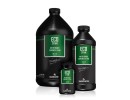









- Stock: In Stock
- Model: GCF
 Made in USA

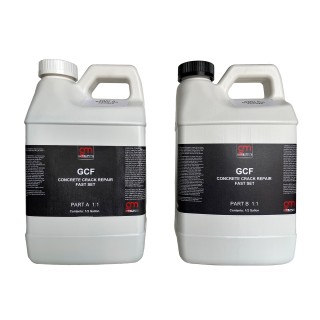
GCF – Fast-Setting Polyurethane Concrete Crack Filler
GCF is a fast-setting, two-component polyurethane concrete crack filler for repairing cracks, holes, pop-outs, and localized spalled areas in sound, stable concrete. Its low viscosity helps the mixed material flow into narrow openings and deep into the pores of properly prepared concrete, rather than simply covering damage at the surface.
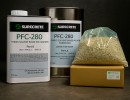
Use GCF on its own for small cracks, pour it over clean, dry mason sand to fill larger voids, or blend it with sand to form a thicker patching paste. The 1-gallon kit includes equal amounts of Part A and Part B. At approximately 70°F, light foot traffic may be possible in 15–20 minutes, with heavy traffic generally possible after about 1 hour, subject to actual conditions.
GCF is intended for manual application. Applicator tools and injection equipment are not included.
Quick Reference: Cure Time, Application Conditions & Coverage
Cure Times at Approximately 70°F
| Return to Service | Typical Time |
| Light foot traffic | 15–20 minutes |
| Heavy traffic / equipment | Approximately 1 hour |
| Recoat / topcoat | Approximately 1 hour, subject to the topcoat manufacturer’s requirements |
| Grinding / flush finishing | Typically 15–30 minutes, once the repair is hard enough to grind |
Application Conditions
| Condition | Requirement |
| Installation temperature | 20°F–90°F |
| Concrete surface | Clean, dry and at least 5°F above the dew point |
| Newly placed concrete | Allow at least 30 days of curing before applying GCF |
| Temperature and cure | Warmer conditions generally shorten cure time; colder conditions extend it |
Mixing & Coverage
| Application / Repair Size | Guideline |
| Mix ratio / kit contents | 1:1 by volume; 1/2 gal Part A + 1/2 gal Part B = 1-gal kit |
| Working batch | Mix only what can be used in approximately 1–2 minutes |
| Sand-backed repair estimate | Approximately 0.2 U.S. fl oz GCF per cubic inch of sand-filled void |
| 1/2" × 1/2" crack with sand backfill | Approximately 210 linear feet per 1-gal kit |
| 1" × 1" void with sand backfill | Approximately 53 linear feet per 1-gal kit |
Coverage is an estimate for appropriate sand-filled voids, not a guaranteed yield. Crack shape, absorption, aggregate and waste affect consumption. Curing time also depends on temperature and repair conditions.
Key Benefits of GCF Concrete Crack Filler
- Fast return to service. Typical light foot traffic in 15–20 minutes and heavy traffic in about 1 hour at 70°F.
- Deep-penetrating, low-viscosity formula. Flows into narrow cracks and the pores of prepared concrete.
- Three practical repair methods. Apply neat, saturate dry sand backfill, or mix a sand-filled patching paste to suit the damaged area.
- Strong adhesion to concrete. The technical data sheet reports typical bond strength of 3,800 psi neat and 9,000 psi when used with sand.
- Contractor-friendly bulk kit. One gallon of mixed material: ½ gallon Part A plus ½ gallon Part B, mixed 1:1 by volume.
- Grindable and coatable. Repairs can be ground flush typically within 15–30 minutes at about 70°F, once sufficiently hardened, and finished with compatible coatings or overlays after proper preparation.
Where to Use GCF for Concrete Crack Repair
GCF is suitable for concrete crack and patch repairs on residential, commercial, and industrial surfaces where the concrete is sound and the crack is stable. Common examples include driveways, sidewalks, patios, garage floors, shop floors, and warehouse slabs. It can also be used for localized holes, pop-outs, and surface spalls when the application method matches the size and shape of the damage.
GCF is not intended to replace a flexible expansion-joint sealant or correct ongoing slab movement, structural settlement, unstable concrete, or an unsupported base. Evaluate the cause of recurring cracks before filling them.
How GCF Repairs Cracks Instead of Only Covering Them
A surface-level patch may hide a crack without reaching deeper into the opening. GCF is designed to flow into prepared cracks and seep deep into the concrete’s pores, creating a strong bond within the repair area. For wider cracks and voids, clean, dry mason sand acts as an aggregate that strengthens the repair while filling much of the space. That means less GCF is needed, saving material and reducing repair costs.
How to Apply GCF Concrete Crack Filler
Surface Preparation and Mixing
- Remove loose material and open pores. Clear dirt, oil, loose concrete and other bond-breaking contaminants. Grind the surrounding concrete to expose fresh, open pores. For larger cracks, use a diamond wheel or crack-chaser blade to open the crack and expose the interior surfaces. Hairline cracks do not always need to be widened.
- Vacuum and dry. Vacuum away dust and debris that could interfere with proper bonding. The concrete must be dry, at least 5°F above the dew point, and at least 30 days old.
- Mix equal volumes. Combine Part A and Part B at a 1:1 ratio by volume. For a small batch of approximately 100 mL, the TDS indicates a roughly 10-second mix may be sufficient for a uniform blend. Follow the TDS, mix thoroughly, and prepare only what you can place in about 1–2 minutes.
Method 1 — Using Neat GCF for Hairline and Small Cracks
After preparing and drying the crack, pour the freshly mixed GCF directly into the opening without adding sand. Allow the low-viscosity material to flow and self-level. Add material as needed while it remains workable, then allow it to cure before grinding the repair flush with the surrounding concrete.
Method 2 — Using GCF with Sand Backfill for Large Cracks, Holes, and Voids
Prepare the opening, then fill it tightly to the surface with clean, dry mason sand. Pour freshly mixed GCF over the sand until it has fully penetrated and saturated the backfill. Level the surface with a trowel if needed. Sand backfill can significantly reduce the amount of liquid GCF needed for larger repairs.
Method 3 — Making a GCF and Mason Sand Patching Paste for Through-Slab or Vertical Voids
For holes that extend completely through the slab, vertical repairs, or other openings where liquid GCF could run out, mix clean, dry mason sand into freshly blended GCF to make a thicker patching paste. Pack or trowel it into the prepared area before the material begins to set. Use backing or containment where needed to keep the repair material in place.
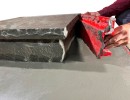
Watch the GCF application demonstration: Concrete Crack Filler — Fast-Setting, Deep-Penetrating (4 Methods)
Coverage and 1-Gallon Kit Contents
Each GCF kit contains ½ gallon of Part A and ½ gallon of Part B for a total of 1 gallon (128 U.S. fluid ounces) of mixed material. Coverage depends on crack size, concrete absorption, aggregate dosage, and material loss. See the quick-reference chart near the top of this description for sand-backfill planning quantities.
For suitable wider repairs, dry mason sand backfill helps reduce liquid GCF consumption. Neat application without sand requires considerably more material to fill an equivalent void.
GCF Technical Specifications
Typical values from the current GCF technical data sheet.
| Property | Specification |
| Product type | Two-component, fast-setting polyurethane concrete crack repair |
| Mix ratio | 1 part A : 1 part B by volume |
| Typical working batch | Only what can be placed in 1–2 minutes |
| Shore D hardness | 71 |
| Tensile strength | 4,500 psi |
| Elongation | 5–6% |
| Compressive strength | 4,400 psi as slurry with aggregate sand |
| Bond strength | 3,800 psi neat / 9,000 psi with sand |
| Impact / abrasion resistance | Excellent (TDS descriptors) |
| Primer | Self-priming on properly prepared concrete |
| Cured appearance | Gray to greenish-gray; may vary with sand and exposure |
| Storage / shelf life | Store 55°F–85°F; one year unopened |
Finishing, Outdoor Exposure, and Important Limitations
GCF may be used outdoors on properly prepared, stable concrete, including driveways and sidewalks. However, GCF is not UV-stable, and sunlight or certain lighting conditions may cause the exposed repair to discolor. The standard cured appearance is gray to greenish-gray; it is not intended to be an exact color match for decorative concrete.
After adequate cure, the repair can be ground flush and, if appropriate, finished with a compatible coating or concrete overlay. For a more uniform resurfaced appearance, consider GlobMarble Multi-Pro Concrete Overlay. Check coating compatibility and preparation requirements before applying another product.
GCF has approximately 5–6% elongation, but it is a relatively rigid crack repair—not a flexible sealant for expansion joints or cracks that repeatedly open and close. It is not a complete waterproofing system, and no specific freeze–thaw service life or high-temperature foundry rating is claimed.
Frequently Asked Questions
Q: How do you repair cracks in concrete using GCF?
A: GCF is suitable for DIY concrete crack repair, but proper preparation is important. Remove loose concrete, dust, oil, and other contaminants, then grind the repair area where needed to expose clean concrete. Hairline cracks do not always have to be widened.
Mix equal volumes of Part A and Part B, making only what you can apply within approximately 1–2 minutes. For small cracks, pour the mixed GCF directly into the clean, dry crack and let it self-level. For larger cracks or holes, pack with clean, dry mason sand and pour GCF over it until the sand is fully saturated. For difficult areas, mix GCF with sand to form a thicker patching paste.
Q: What is the best concrete crack filler for my repair?
A: The best concrete crack filler depends on the type of damage. For sound, stable cracks, GCF is designed to penetrate deep into narrow cracks and the pores of the surrounding concrete, creating a strong mechanical bond. Its rapid cure also makes it useful where downtime matters. At approximately 70°F, light foot traffic is typically possible in 15–20 minutes, and vehicle traffic in about 1 hour.
For wider cracks and voids, you can backfill most of the opening with clean, dry mason sand, then pour GCF over it until the sand is fully saturated. This not only creates a stronger repair but also significantly reduces the amount of GCF needed, making the repair much more economical.
Note: No crack filler can correct an underlying structural or support problem.
Q: Should I use concrete crack filler or a concrete patch?
A: Conventional cement-based concrete patches are often used to rebuild chipped concrete or improve appearance. However, simply covering a crack with a surface-level patch may not create a strong bond deep inside the opening, so that kind of cosmetic repair may not last.
GCF is specifically formulated to penetrate deep into cracks and pores in sound concrete, creating a strong bond rather than just covering the surface. For hairline cracks, use it neat; for larger cracks or voids, pour it over clean, dry sand backfill or mix it with sand to create a thicker patching paste. The appropriate method depends on the repair.
Q: Do I need to clean or widen the concrete crack before filling it?
A: Yes, cleaning is essential, but widening is not always necessary. Remove all dust, dirt, oil, loose concrete, and other contaminants. Grinding is the preferred preparation method because it exposes clean concrete and opens surface pores for bonding.
For medium and larger cracks, use a diamond blade or crack-chaser blade to open and clean the repair area when needed. For hairline cracks, grind and clean the surrounding surface, but the crack itself may not need to be widened. Finish by thoroughly vacuuming away debris and make sure the concrete is dry. GCF is self-priming, so a separate primer is normally unnecessary.
Q: Can GCF be applied to damp concrete or newly poured concrete?
A: No. The repair area must be clean and dry before application. The technical data sheet requires newly placed concrete to cure for at least 30 days and the substrate temperature to remain at least 5°F above the dew point. Moisture, frost, or surface contaminants can interfere with proper bonding.
Q: Can GCF repair hairline cracks, wide cracks, and deep holes?
A: Yes. GCF is intended for cracks, spalled concrete, pop-outs, holes, and similar damage in sound, stable concrete. For hairline cracks, apply the mixed product neat (without sand) so its low viscosity can flow into narrow openings.
For wider or deeper cracks, fill tightly with clean, dry mason sand to the surface, then add GCF until the sand is fully saturated. For vertical or through-slab repairs where a free-flowing liquid could run out, a sand-blended patching paste may be more practical. Work in small batches because GCF cures quickly.
GCF is not recommended for expansion joints.
Q: How long does GCF take to cure, and when can I walk or drive on it?
A: At approximately 70°F, the technical data sheet gives the following typical cure times:
- Light foot traffic: 15–20 minutes.
- Heavy traffic or equipment: approximately 1 hour.
- Recoat or topcoat: approximately 1 hour.
The video also demonstrates grinding a repair in about 15 minutes, once sufficiently hardened. Actual cure time depends on conditions; colder temperatures can require additional time. Do not return the area to service until the repair has reached the needed cure.
Q: How much GCF do I need, and how many feet will one gallon cover?
A: Coverage depends on the width, depth, and length of the crack, as well as surface absorption and the application method. For repairs using mason sand backfill, our product page estimates approximately 0.2 fl oz of mixed GCF per cubic inch of void. Based on that estimate, one 1-gallon kit could cover roughly 210 linear feet of a 1/2-inch-wide by 1/2-inch-deep crack, or about 53 linear feet of a 1-inch-wide by 1-inch-deep void. These are estimates, not guaranteed yields.
Each 1-gallon kit contains 0.5 gallon of Part A and 0.5 gallon of Part B. For larger repairs, clean, dry sand backfill can significantly reduce liquid consumption. Hairline cracks filled with neat GCF have different coverage, and actual usage will vary with crack shape, concrete absorption, and material loss during application.
Q: How should I store GCF, and how long does an unopened kit last?
A: Store the components between 55°F and 85°F and allow them to reach normal room temperature before use. The technical data sheet lists a shelf life of 1 year in unopened containers when stored properly. Avoid mixing large batches because the material cures rapidly once Parts A and B are combined.
Q: Can GCF be used outdoors on driveways, patios, and sidewalks?
A: Yes. GCF can be used on outdoor concrete such as driveways, patios, and sidewalks when the concrete is sound and the cracks are stable. The recommended application temperature is 20°F–90°F; colder conditions generally require more curing time.
The substrate must be clean and dry, and its temperature must be at least 5°F above the dew point. In cold weather, store the GCF components and sand at room temperature before use. GCF is not UV-stable, so an exposed repair may discolor in sunlight.
Q: Does GCF stay flexible when concrete expands and contracts?
A: GCF cures into a strong, relatively rigid polyurethane repair. The technical data sheet lists approximately 5–6% elongation, which means it has some give but is not designed to function like a flexible expansion-joint sealant.
For stable cracks, its deep penetration and bond to sound concrete can provide a durable repair. If a crack continues to move because of settlement, temperature-related expansion, or other underlying causes, it may crack again. For active joints or significant movement, use a product intended to accommodate that movement.
Q: Will GCF stop water from entering concrete cracks?
A: GCF fills and bonds within cracks and voids, helping close openings through which water could enter. Its low viscosity allows it to penetrate properly prepared cracks rather than simply covering the surface.
However, GCF is a concrete crack repair product, not a complete waterproofing system. It should not be relied on alone to resolve active water leaks, hydrostatic pressure, or cracks that continue to move. Address the underlying condition and any waterproofing requirements separately.
Q: Will GCF match my concrete color, and can I paint over it?
A: GCF comes in one standard color and cures green-gray. The final shade can also change with the type of sand used and UV exposure, so it is not intended as a color-matched decorative finish. Experimenting with oxide pigment is possible, but not an approved or guaranteed tinting method.
The cured repair can be painted, coated, or covered with a compatible concrete overlay after proper preparation. Grinding the repair flush with the surrounding concrete is typically recommended before refinishing. The TDS lists about 1 hour before recoating at 70°F; always follow the requirements of the specific finish you plan to use.
For a more uniform finish, consider GlobMarble’s Multi-Pro Concrete Overlay.
Q: How long does a GCF concrete repair last?
A: GCF is designed to provide a strong, durable repair in sound, stable concrete. Its technical data sheet lists high bond strength along with excellent impact and abrasion resistance.
Actual service life depends on preparation, application conditions, traffic, moisture, and—most importantly—whether the concrete continues to move. There is no fixed guaranteed lifespan. If the substrate stays stable and the repair is properly installed, GCF is intended as a long-term repair; future movement or damage may still require further work.
Shipping:
Processing time: 1–2 business days.
Carriers: UPS & FedEx.
Worldwide shipping from Brooklyn, NY.
Returns:
30-day return policy for unused items.
Money-back guarantee if the product is defective.
Customer pays for return shipping unless the item is damaged.
Reviews
Please leave a review
Write Review